Bhimbetka Cave Paintings Pdf
Cannibal Planet is a FREE Social Network for anyone to Explore the world of cannibalism. Cave paintings are also known. The oldest date given to an animal cave painting is now a pig that has a minimum age. The Bhimbetka rock shelters exhibit the.
Driver Package Already Exists In Driver Store more. Cannibal Planet is a FREE Social Network for anyone to Explore the world of cannibalism.
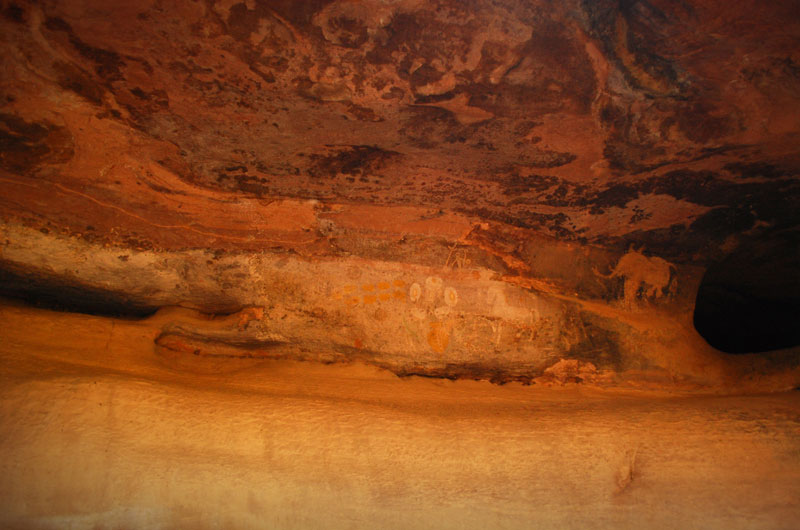
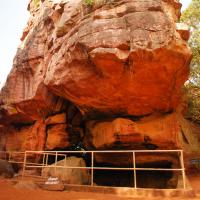
One of the shelters in the main complex open to the publicThe Bhimbetka rock art sites that we saw next, about 45 kilometres south-east of Bhopal, have become famous: they are the ones that are always mentioned whenever Indian rock art is alluded to. They were discovered and revealed to the world by V.-S. Wakankar from 1957 onwards. Bhimbetka, set in the Vindhyan range of central India, is about ten kilometres by two. On seven hills more than 500 painted sandstone shelters are known in an environment of forests, nowadays threatened by population increase and pressure.
Some of the painted sites are very minor, with a few images only whereas there will be hundreds in others. They were put on the World Heritage List of UNESCO in 2003. Fifteen or so of the most spectacular ones, in an environment of convoluted cliffs on the top of a hill with a large vista, are open to the public.
They have been skilfully fitted up with unobtrusive but efficient passageways and protections, so that visitors can view the paintings at leisure but are kept sufficiently away not to cause any damage. Delicious Deluxe 1 Free Download Full Version there. Guards provide information whenever necessary and see to it that the regulations are not broken. 'If one visits a painted shelter, one is confronted with two types of drawings - one very clear, bright and fresh looking, while the others, underlying them are faded, fragmented and hardly visible. The fresh ones feature mainly bands of marching and fighting soldiers, cavaliers being chased and aimed at by masked hunters equipped with bows and arrows and barbed spears. In between these two types of figures sometimes we find a third category These are of long-horned cattle, other domesticated animals and men engaged in activities which can be associated with a primary stage of civilization - the beginning of sedentary life' (Mathpal 1998: 10).
The art in the cave dates between 13,000–9,000 Cave paintings are also known as 'parietal art'. They are painted drawings on walls or ceilings, mainly of prehistoric origin, dated to some 40,000 years ago (around 38,000 BCE) in Eurasia. The exact purpose of the cave paintings is not known. Evidence suggests that they were not merely decorations of living areas since the caves in which they have been found do not have signs of ongoing habitation.
They are also often located in areas of caves that are not easily accessible. Some theories hold that cave paintings may have been a way of communicating with others, while other theories ascribe a religious or ceremonial purpose to them.
The paintings are remarkably similar around the world, with animals being common subjects that give the most impressive images. Humans mainly appear as images of hands, mostly hand stencils made by blowing pigment on a hand held to the wall.